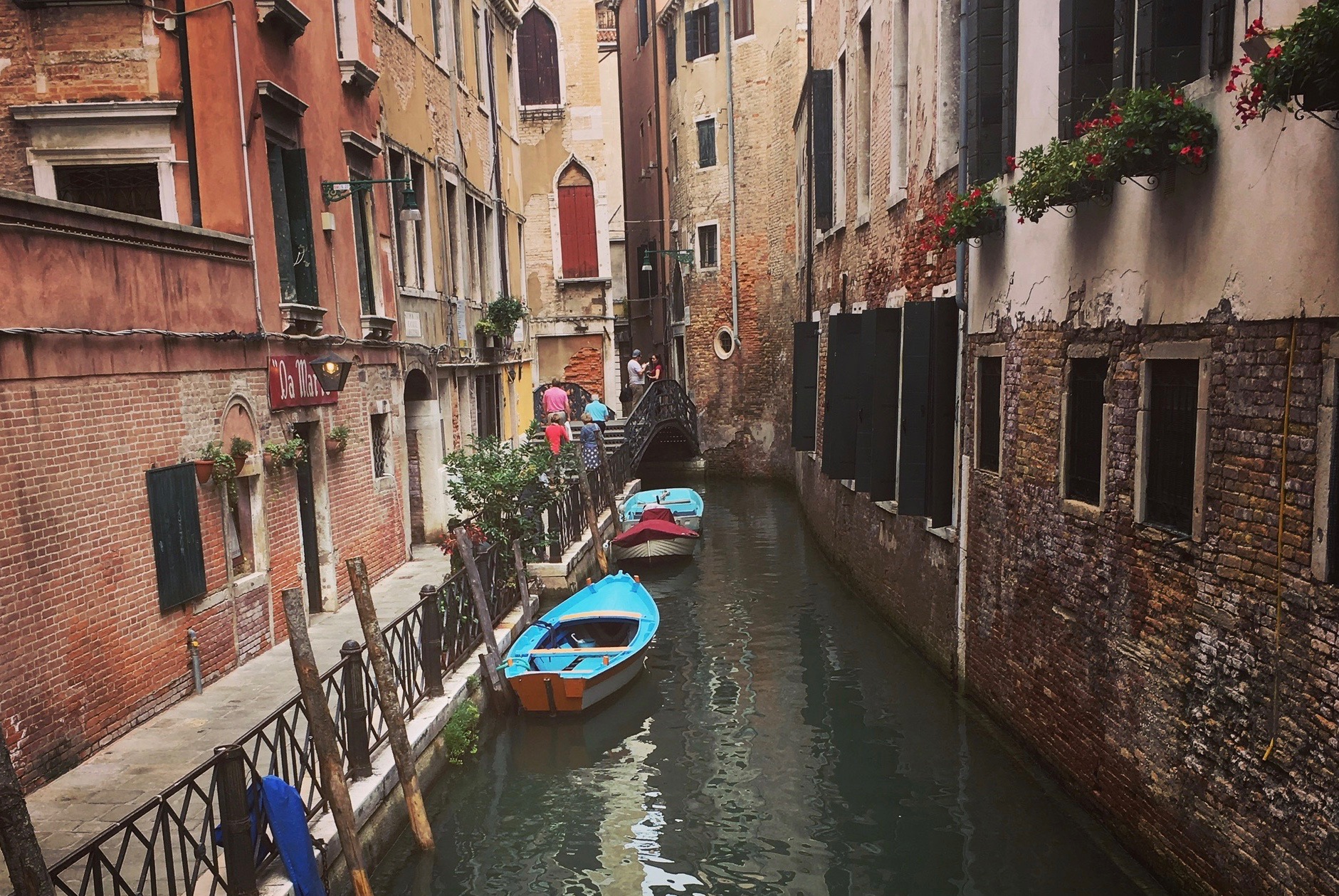
Three nights in Venice…
We arrived in Venice on September 29th via a 6-7 hour train direct ride from Munich, arriving a little after 6pm. The train traveled through the Bavarian, Austrian, and Italian portion of the Alps before settling in at the Santa Lucia Train Station in Venice, also known as the Ferrovia in the city.
We managed to find our way from the train station to our hotel fairly easily with two one way tickets on the ‘Vaporetto’ or water bus since there are no cars in Venice past the train station. Each ticket costs €7.50 for a one-way ride, so €15 total for the two of us. The ride was direct to the Rialto “bus” stop and we disembarked and headed around the corner straight to our hotel within 30 minutes of our arrival in the city. We stayed at the Hotel A La Commedia near the Rialto Bridge. We could have walked, but the streets are very crowded and the city is somewhat like a maze with only a few crossings over the Grand Canal, which we needed to cross in order to get to the hotel.


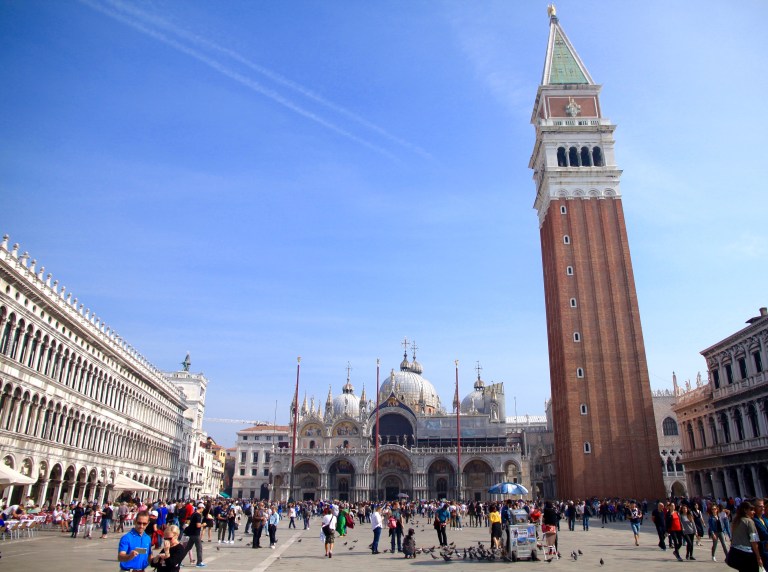
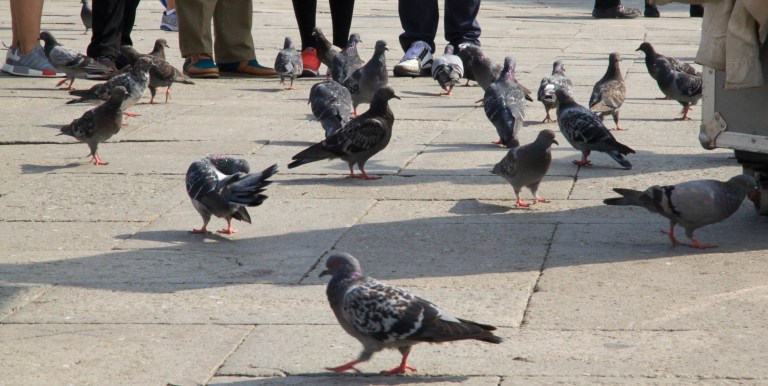
Venice is a city that is very old, but extremely beautiful with extraordinary artistic detail throughout the city. The statues, water fountains, and buildings really leave an impression of the history and care that went into construction and design over 1200 years. Everyone knows about the canals and Gondolas, which are a trademark of the city and you wouldn’t feel like you were in Venice without them, but the history behind the city as a whole was more impressive. One additional trademark that sticks out in the mind ahead of arrival in the city is the Piazza San Marco, or the main square with the Basilica San Marco and the Campanile (tower) and of course, the pigeons. Venice is typically portrayed as one of the classic Italian cities and very romantic in movies, TV shows, etc.
Upon settling in at our new hotel, the first order of business was to walk to and see the Piazza San Marco, as it was only a few blocks away. As we mentioned, Venice is sort of like a maze, every building with the exception of churches and a few towers here and there are mostly the same height and the walkways can very narrow from time to time. Even though the way to the Piazza was very short, naturally we missed one key turn and immediately went the wrong way. No worries though as it took maybe 2-3 minutes to realize the mistake and correct it. Upon seeing the vastness of the square in a city so tightly packed it’s no wonder people flock to the area for space alone. However, the Basilica and Campanile really make the experience with their presence in the square. As opposed to other cities in Italy that we have visited, the restaurants in the square don’t really serve a full dinner service. Instead they are mostly viewed as cocktail or coffee shops with the occasional snack. One thing they do have though is live music with a mix of classic instruments (piano, clarinet, saxophone, violins, etc.) At least three or four of the coffee shop/cocktail places in the Piazza had these elements. Mike was very excited as sitting and listening to them was appealing. We ventured around the square briefly then headed out to find a place to eat, expecting to explore Venice and the Piazza the next day. Naturally, Mike wanted historical information, so he bought a book…
A Brief History of Venice
Venice dates back to the Roman Empire and was settled as good point between land and sea, which continues to be a defining trademark of the city. The area was originally very marshy and the Venetians (who were part of the Roman Empire) inhabited the area with two main purpose: fishing and salt production / mining. Wealthy folks also inhabited the area as a “vacation spot” during the time due to its tranquility. It also served a refuge as the Roman Empire began to fall. Some historians call the official beginning point of the history of Venice as when the Basilica of San Marco began. San Marco is the Patron Saint of Venice. The Venetians wanted control of trade routes in the area and competed with many civilizations and local areas for control mostly with Genoa over a 400 – 500 year period after coming to terms due to the rise of the Ottoman Empire. Venice ended up controlling a large portion of the Adriatic Coast. In the sixteenth century a period of rapid expansion began as villas were developed and designed and the city architecture started to take shape. The city began to decline as trade routes across the Atlantic to the West with Spain and Portugal decreased Venice’s influence. Venice was a city in decline during Napoleon’s reign and beyond into the 1800s. Austria was also an influence on the region until it was eventually annexed to the Kingdom of Italy in 1866. Venice has had a profound influence on art and architecture. Murano blown glass is known feature from the region as well. Today, the city attracts tourist from all over to globe to experience the history and culture. (for a more thorough background, probably best to read elsewhere)
Piazza San Marco
During our two full days in Venice we wanted to experience some of the touristy elements that the city has to offer, mainly those in and around the Piazza San Marco. Our first stop was the Palace of the Doge (ruler of the Venetian area) called the Ducal Palace or Palazzo Ducale, which is located directly next to the Basilica. We visited the palace and could not believe the amount of detail and artistry that went into the place. Interested in learning more, we bought audioguides that would explain some history, much too detailed to include here. There are many giant halls throughout and some were quite interesting especially considering the various functions executed within. We walked around admiring the vastness and detail. Interestingly, there was a fire in 1566 which destroyed a lot of the artwork in the palace and a lot of it needed to be restored. One key feature was the Bridge of Sighs, a notable bridge in Venice that crosses a canal and connects the palace to the prisons on the other side.
Some of the features of the Palazzo Ducale are below, but we forgot to take a picture of the outside.


One highlight from our tour was Mike starting to get antsy walking around and listening to the vast information provided by the audioguide. He wanted to get out, but we were trapped between two larger tours walking through with an in person guide. On top of that, we were in the prison area of the palace and the height of the doorways wasn’t conducive to his height as he had to duck down almost a foot in some cases. Patrons of the palace and viewers of the Bridge of Sighs outside were treated with an authentic version of sighing as Mike walked over the bridge and we got further lost and stuck in the palace. We did make it out though!
Due to a backpack issue for the Basilica (not allowed), we visited both the Campanile and Basilica on our second full day. The Basilica is massive in scale and quite beautiful on the outside. The inside was fairly dark and the ceiling was covered in gold and a lot of artistic detail. There was a mass going on in one area, which we could hear as we walked around in silence. Interestingly entrance to the church is free, but any specific areas within the church cost minor amounts that would add up if you did all of them (e.g. Treasury was €3, another area was €2, etc.) We were not ‘allowed’ to take photos, but Mike snuck one in below:

The Campanile was a very cool visit as we went to the top of the tower to view the city and have included some pictures looking out and down from the tower.
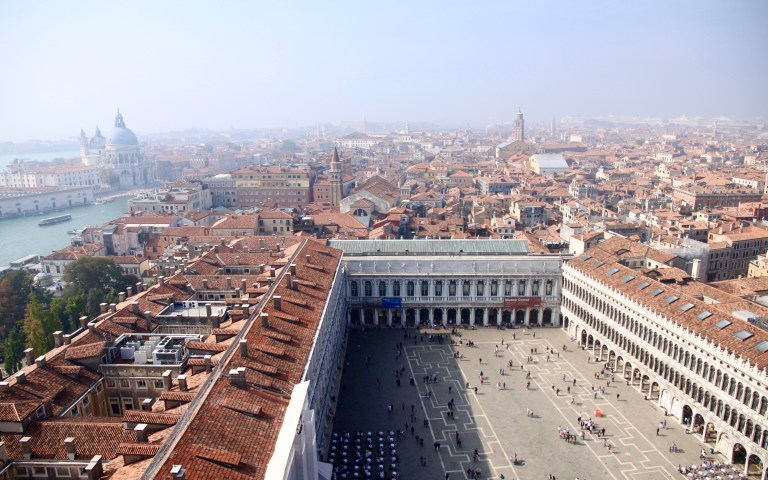
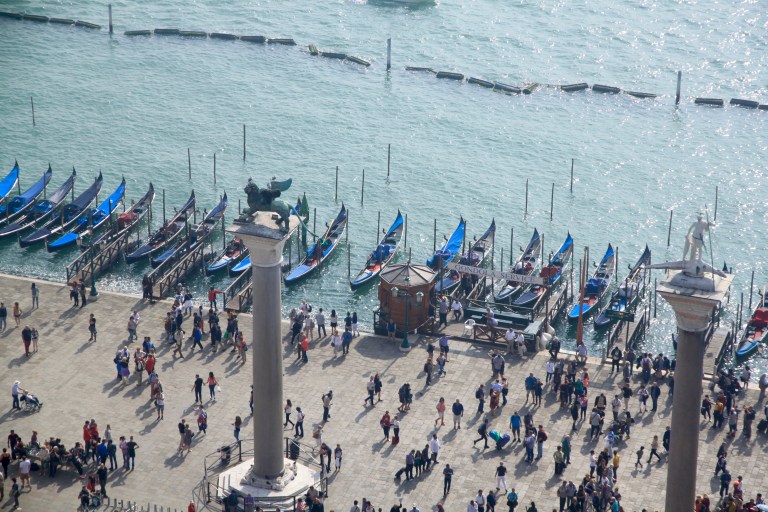
Gondola Ride
Yes, we took one…and yes it was expensive, but we likely will only be in Venice one time and there was nothing more ‘Venetian’ to do than ride a gondola around the canals. It is €80 for 30min, which is the standard price throughout the city, except for night tours, which are €100. If you tried to get a gondola near the Piazza, as many tourist do, you would be treated to what we would describe as a “Disney ride” in that so many gondolas are in the area that they follow one another by only a few feet in the exact same circle. You can catch a gondola almost anywhere in the city and we wanted a more private tour, so we walked to a less crowded area (which is difficult to find) and grabbed one. The gondolier was a very nice man who entertained and responded to Mike’s lacking Italian (he also described the area by the Piazza as “DisneyWorld”). Without being asked, he sang a little bit and also explained certain areas of the city that we passed. We weaved through small canals until we reached the Grand Canal and circled back to where we met him. It was very relaxing. See some pictures below:
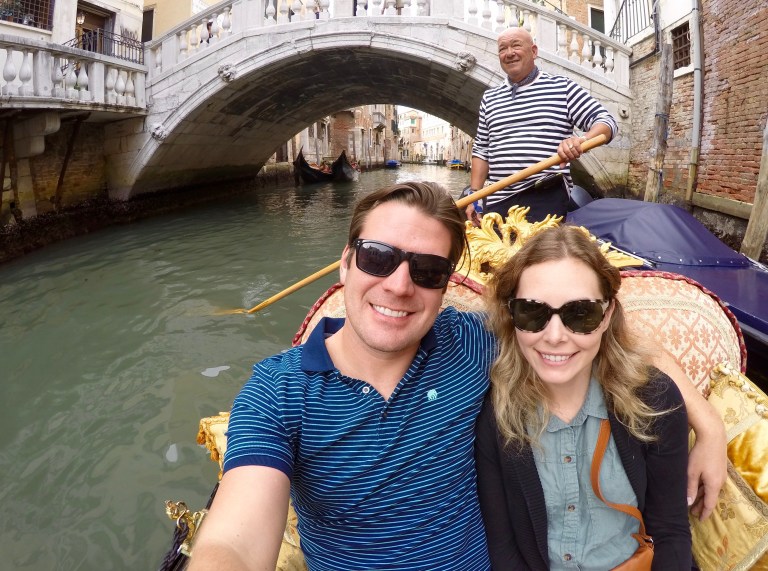


The rest of our time in the city we really did our best to take in the atmosphere and culture. This is the only place in Italy where we noticed a significant number of tourist were actually Italian! Most of the time you are surrounded by people from everywhere else (which was the case here too), but Italians were visiting Venice which was interesting to us and we think speaks to beauty and significance of coming to visit Venice. We sat in the Piazza and drank wine while taking in music and doing a little bit of people watching. We also visited some of the markets around town and snapped a couple of photos below. Additional photos show some of the small details throughout the city that added to the charm.
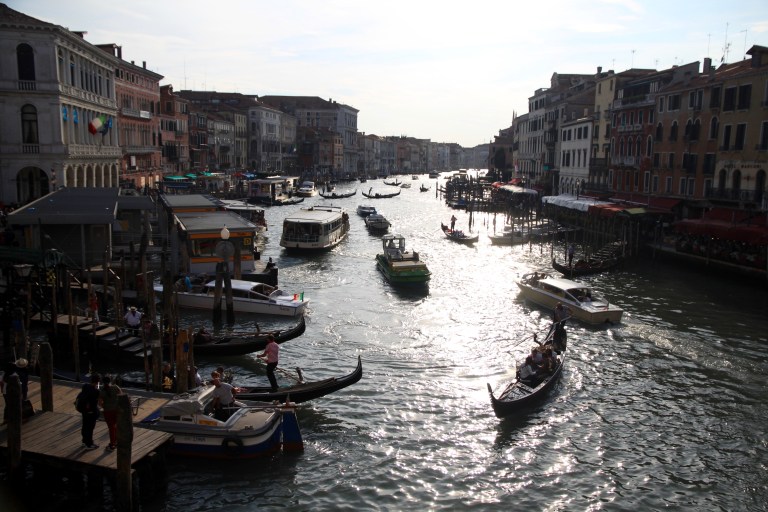


We noticed that the cost of nearly everything, even outside of the main square area, was quite high compared with other Italian cities. Liters of house wine, which are a staple of visiting Italy, were harder to find than we had experienced anywhere else in the country and tended to be pricey. Because of the city’s compactness and the fact that waterways function as the streets which limits people’s ability to move around, the city is quite crowded. Also, since the walkways are narrow, as the sun sets some walkways can be very dark. However, the city is very beautiful and we’re very happy we came to see it. As we mentioned, the details around the city are remarkable and though the saying is “Rome wasn’t built in a day”, you could easily replace ‘Rome’ with ‘Venice’ as its apparent the city has been a long time in the making.
Off to Dubai!
Grazie per la lettura!
Ciao e Amore,
Mike e Erica
PS…since we are traveling with carry on only for our four-week venture, we did visit a lavanderia to wash our clothes worn thus far. We found one, walked through the streets at night, bought a bottle of wine and waited for our laundry to finish.


Venice looks beautiful! thank you two for taking this trip
LikeLike
I’m just getting to read these now, and it’s really cool to visit vicariously through your blogs. We also went to Venice early in our marriage when we lived overseas. Ours included Greg having chicken pox which put an extreme damper on the trip. However, it gave me reason to learn “chicken pox” in Italian (varicella) not pollo e pox as we were describing it.
These blogs are fantastic, so glad to be included!
LikeLike
Thanks, Danielle! Sounds like you had an adventure in Venice too… Trip was great and I’m glad you’re enjoying reading the posts. 🙂
Mike
LikeLike