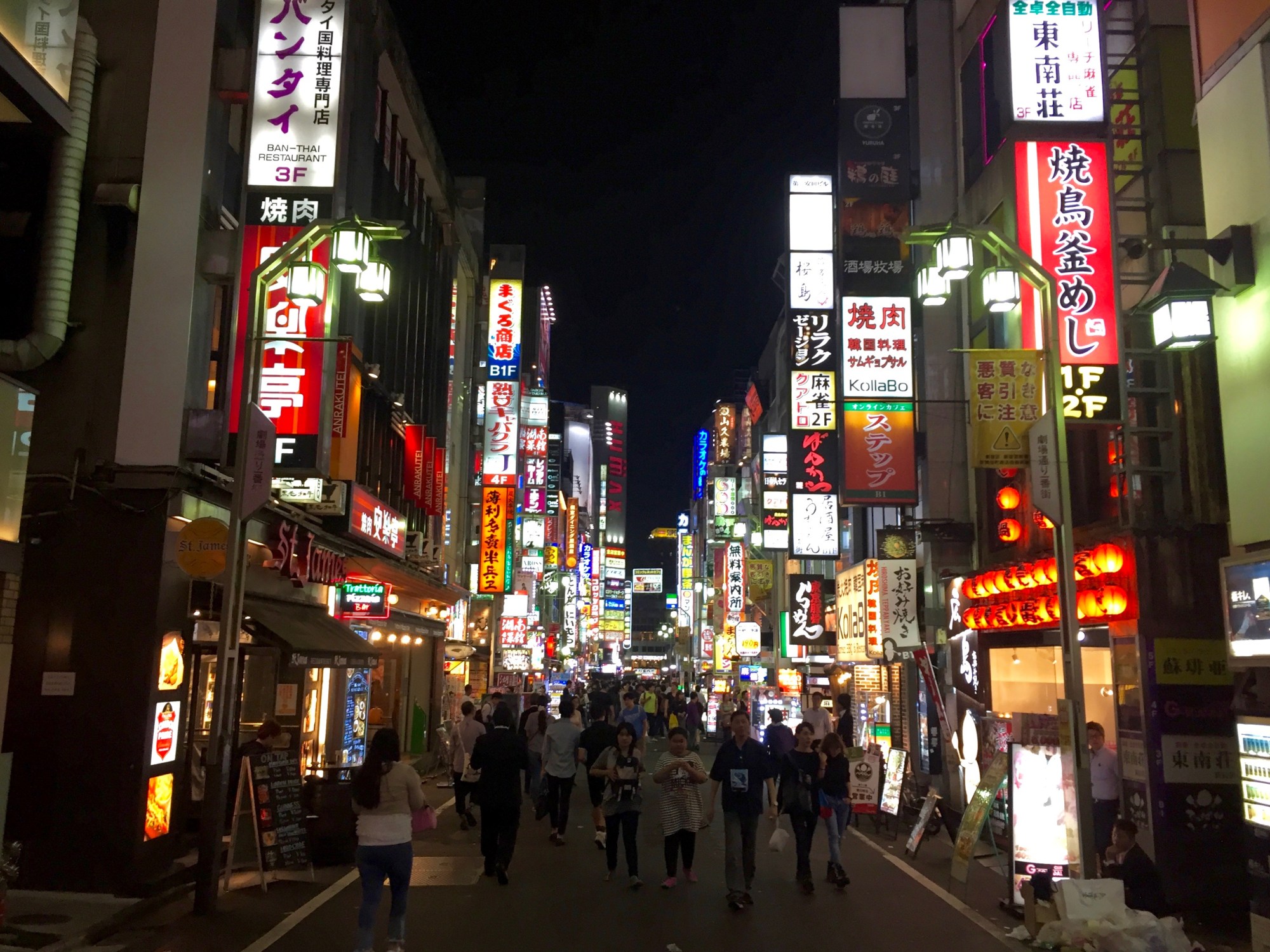
Our last stop on our four week adventure brought us to Tokyo, which we picked because we had never been and it allowed us to book a direct flight home to Chicago, so no layovers to deal with. We reached Tokyo earlier than expected since we decided at the last minute to skip Bangkok due to the death of the King and mourning period being observed, which gave us two more days in town. Tokyo is an amazing combination of traditional and modern with it’s older temples, but also the well lit and efficient skyscrapers, efficient train system, and vending machines everywhere. From what we saw, we can only say: Tokyo is awesome!
Shots around Tokyo below. Similar to Singapore, it’s a city that really comes to life at night.


Tokyo has around 13.5 million residents within the city limits making it the 8th most populated city in the world. If you include the larger metro area the population jumps to 38 million people and the most populated metro region in the world. Tokyo’s population is on the rise despite Japan’s population actually in decline. Given the amount of people and moving them around such an expansive metropolis, the train system here is rather robust and amazingly efficient. The city is actually made up of a group smaller cities called “prefectures” or special wards, but is still viewed as one city in total.
In terms of everyday major cultural differences from the American culture we know, people walk / drive on the left, the group is more important than the individual (not that we noticed that in particular), and tipping isn’t a common practice. Regarding tipping, it can be considered an insult as a tip implies the service provider doesn’t know how to value their own product/service, which can lead to some uncomfortable encounters. Luckily, Erica looked up some of these things ahead of time, but Mike immediately forgot upon arrival in the hotel and tried to tip the woman who showed us our hotel room, but she simply smiled, blushed, bowed, waved both her hands, backed up, and said “no, no, no…” – Mike did’t make that mistake again.
The yen is the currency of Japan and was our 8th and last currency on our trip. The conversion rate was approximately ¥104 per $1, so the simple math is to divide every price by 100 to get the approximate dollar amount. This was the easiest conversion we had back to US Dollars of our entire trip.
Surprisingly, a lot of signage was written or offered in both Japanese and English everywhere we went, so it wasn’t as difficult as we imagined to communicate or get around. Since we live in Chicago, we are very familiar with moving around a city and we were very comfortable here. We never felt that the city was dangerous and in some polls Tokyo is rated the #1 city in the world for safety. The subway stations here are more like shopping centers. The signage is clear to where the trains are, but you can eat, shop, drink, or get everyday items in every subway station we went through. They are well lit, clean, and more enjoyable than any subway we’ve been in previously.
Map of the Subway System operated by two companies: Toei and Tokyo Metro. There is also another train company for commuters called the JR Lines, but not pictured below.
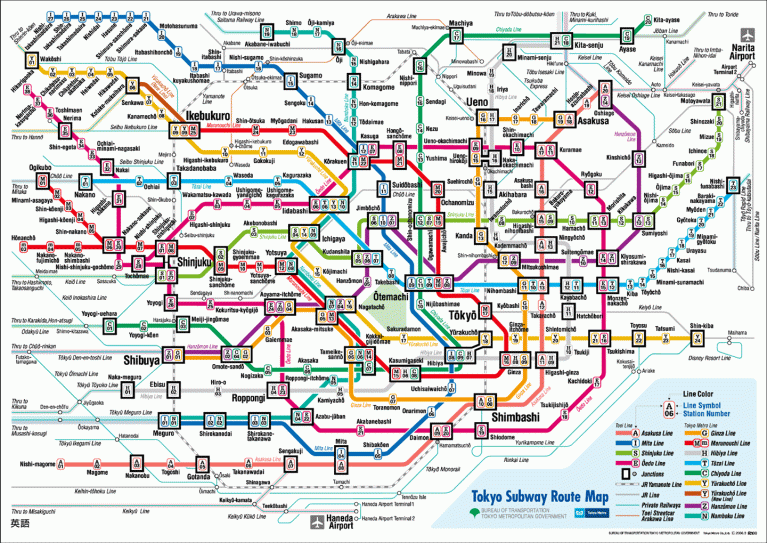
Shinjuku is the busiest railway station in the world with an average of over 3.5 million people a day passing through the station. We happened to pass through that station during rush hour and it was incredibly busy, but we didn’t see any pushing onto or off of trains. Everything seemed pretty orderly. Also, we never waited longer than 90 seconds for any subway train we were trying to catch.
Shots from Subway system:


Before arriving we had a couple things in mind: sushi, ramen, temples, Robot Restaurant (you’ll see), seeing Mt. Fuji, and walking around the city. We didn’t really have a set agenda for outside of a preplanned day trip to see Mt Fuji and some of the surrounding area, which was scheduled for Thursday. Since we had two more full days than intended, we wanted to take advantage of the extra time.
Tokyo boasts the most Michelin Star rated restaurants than any other city in the world, not that we went to them, but food was a big part of our journey here. We were excited to try ramen and sushi. Upon arrival we looked for the best ramen spot within walking distance of our hotel in the Ginza district. With the use of Yelp, we actually located a tiny little place not far away called Ginza Kagari. We asked the front desk about it, and the woman said it must be good because there is always a line, so we checked it out!
 The place only seats eight people with three workers and is located in an alleyway in the middle of the Ginza shopping district. The sign is pretty inconspicuous, as it simply says “Soba” meaning noodles or soup noodles. While in line we met three people from Vancouver who were making their second visit to the shop in as many days, which gave us hope that this was a good find. The group speculated that locals probably don’t like Yelp or other social apps that allow visitors to find places like this, which contributes to the length of the line.
In short, the ramen was amazing! Erica ordered the Chicken ramen with vegetables, which tasted basically like chicken noodle soup, and Mike ordered the pork/beef ramen with a sardine and soy sauce based broth. Both were excellent.
We’ve included some photos from the shop below:


Senso-ji Temple, Asakusa Area, and Tokyo Skytree
The next day we took the subway to Asakusa area to see the Sensoji Temple. The temple is notable for the main entrance gate and the massive lanterns. More importantly, the temple is also the oldest Buddhist temple in Tokyo, built around 628. Between the two main gates of the temple entrance is a corridor known as Nakamise-dori where there are a number of booths selling all sorts of items: food, chopsticks, fans, souvenirs, toys, clothes, etc.
Photos of gates, lanterns, Nakamise-dori, and Senso-ji Temple:


Within the temple there were many different areas to make prayers, wishes, or ask questions. One in particular was a system where you make a wish or prayer, shake a canister, pull out a stick with number or symbol in Japanese, then line that up with a drawer that has a piece of paper inside with an answer to your wish. We both did it:


After visiting the temple, we walked by a little shop with a lengthy line that prompted us to stop and see what all the fuss was about. And it was another lucky find! The name of the place is Kagetsudo. Basically they (and some other local places) sell “ice cream burgers”, but really it’s a sweet bread filled with ice cream. They also sell many ice cream flavors, shaved ice, and apple pies. We tried the sweet bread with vanilla ice cream, cherry blossom ice cream in a cup, and the apple pie. All were delicious, but the sweet bread stole the show and proved why the line was there!
Photos below:


The Tokyo Skytree is a broadcasting tower with restaurants and an observation deck and near Asakusa, so walking distance since we were in the area. We went to see the Skytree, but we didn’t go up inside the observatory. This is the tallest tower and second tallest structure in the world with the tallest being the Burj Khalifa, which we visited in Dubai earlier on our journey. Photos of the Skytree are below:


Robot Restaurant
Later that night we did a Tokyo “must do”…the Robot Restaurant! There’s not too much to say other than we didn’t eat here and it’s an experience we definitely do not regret, despite the $80 price tag per person. Completely weird, but awesome and totally worth it! See below…
Photos from the Robot Restaurant:


Video Montage from the Robot Restaurant – just a sampling…
Afterwards (yes same day), we found a local place that specializes in wagyu beef called Jiromaru. It was another lucky find and after a short wait in line outside we ordered the A4 and A5 beef and tried a piece of the beef tongue. Erica described it as the best beef she’s ever had! Photos below:


Shinjuku Gyoen National Garden, Meiji Jingu Shrine, Shibuya Scramble Crossing
On Wednesday (Day 3) we spent more time walking around Tokyo to see some other sights near Shinjuku and Shibuya. The first was the Shinjuku Gyoen National Garden, which is basically a giant garden/park. The entrance fee was minimal at ¥200 (less than $2) so we paid and walked in. The garden has different sections: greenhouse, French gardens, English garden (field), and Japanese garden. We walked through them and snapped some photos:


Afterwards we walked to the Meiji Jingu (Shrine) in the nearby area of Shibuya. This shrine was located in the middle of a heavily forested region of the park and was a surprising retreat for the middle of a major metropolis. The shrine was undergoing some construction to refurbish and prepare for the coming Summer Olympics in 2020. We took some photos and detail shots, but we were not allowed to photograph the main portion of the temple. The temple is from the Meiji period, which is viewed a period of enlightenment where Japanese traditions were slowly merged together with Western knowledge and culture.
Meiji Jingu photos:


After the Meiji Jingu, we found a spot for lunch and walked around the Takeshita shopping area in the Shibuya area. After shopping, we walked to the Tokyo Metropolitan Government Building for panoramic views of the city, enjoyed a drink while awaiting sundown. These photos are visible at the beginning of this post. Our last stop of the day was probably the most well-known intersection in Tokyo if not the world…the Shibuya Scramble crossing. This is the intersection of two main streets where every 1-2 minutes all the traffic lights stop and the walk signals allow people to cross the street in every which way. There a number of intersections like this in Tokyo, but this is the most famous.
Photos and videos below:

We ended the day with a Japanese beer taste test…

Mount Fuji Day Trip
On Thursday we took a guided tour out to see Mount Fuji, Lake Ashi, Hakone, and ride a bullet train back to Tokyo with an included lunch. The tour was $175 per person, which was the most expensive tour of our trip. We started at 8:15am being picked up by bus and taken to a different bus station to switch to a different bus. The ride to Mount Fuji took 2.5 hours up to the 5th station or highest drivable level you can reach on the mountain. We saw Mt. Fuji along the way, but couldn’t stop for any really good photo ops.
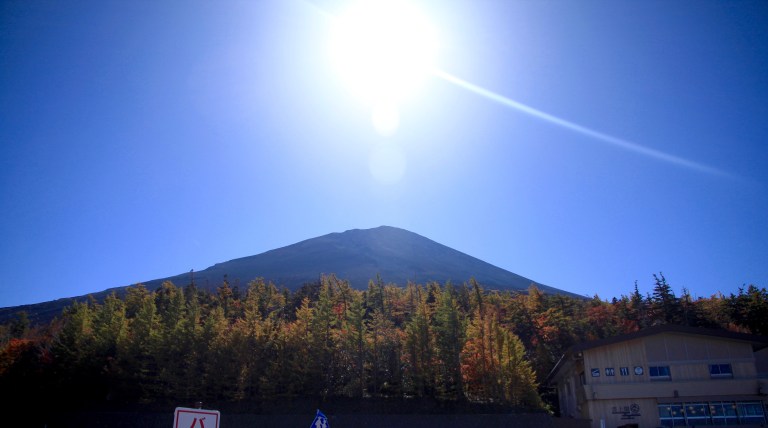
Mt. Fuji is the tallest mountain in Japan and technically still an active volcano although no eruption has occurred in the last 300 years. The peak is 3,776 meters (12,388 ft) above sea level. Our tour guide said the name has three meanings: “Rich Samurai” (due to symbols used to write name), “Never Die”(due to pronunciation of Fuji), and “Goddess of Fire” due to ancient gods and likely since its a volcano. There are snow monkeys at the foot of the mountain where the water is, because there are no rivers on the mountain itself. You can summit the mountain anytime during July and August with special permission needed other times of year. The oldest person to summit it was 103 years old and he did it over 2 days arriving on 8/8/88 with a portion of his wife’s ashes to spread (she died 13 yrs earlier). Eight is a lucky number in Japan. Jimmy Carter has also summited Mt Fuji in 1994.
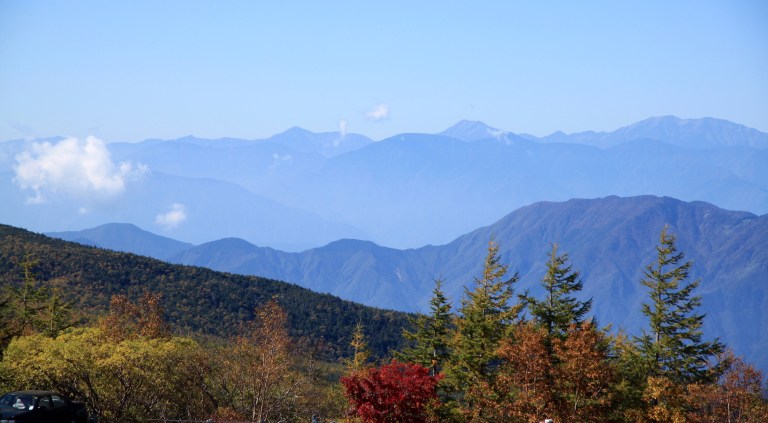
Shots of Mt. Fuji and overlooking the Japanese Alps:
We had 30 minutes at Station 5 and when the time expired some people were not back yet…so our tour guide called the main office and requested to leave them behind. Even though they all showed up before we left, she made a point to tell them we almost left them and let everyone else know. This may sound harsh, but we were on a pretty tight timetable for boats and trains, so timeliness matters. This maybe the only time we saw the “group more important than the individual” in action. We took a 30-minute ride down to our lunch spot, which was a shady looking cafeteria over a souvenir shop. Immediately following we had another hour-long ride to Lake Ashi for our ferry ride:


After our 15-minute Lake Ashi boat ride across to the Mt. Komagatake Ropeway Station, we hopped on the tram to the top for a better view of Mt. Fuji and Lake Ashi. Photos below:


Hakone Komagatake Ropeway Video (4x speed):
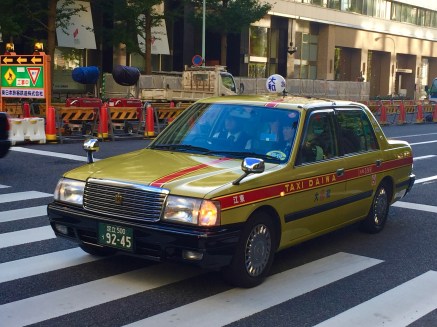
We endured another 45 minutes in the tour bus direct to Odawara Station to catch the Shinkansen back to Tokyo. During this time our tour guide opened it up to questions…and this was the most apalling and ridiculous thing we heard on our whole trip. One woman asked our guide “if the Japanese are so well educated, why don’t they all speak English?” – even though this same person spoke not a word of Japanese. We could not believe it, but somehow our tour guide kept her composure and said that English is taught in school to read, write, and hear/comprehend, but not really to speak. Another guy asked why the cabs were so old…which was also strange (cab pictured below).
After the last bus ride we rode the Shinkansen, or bullet train, back to Tokyo. Although riding the bullet train is thrilling as you can feel the speed, doing it at night really limits the experience since you can only see your reflection in the window. It was more exciting to watch a bullet train zoom by the station!
Bullet Train Photo and Video:

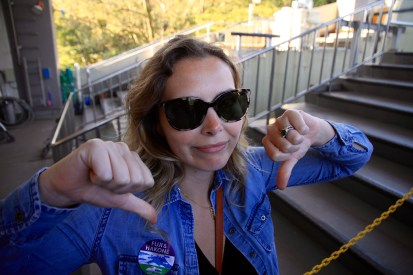
Even though we saw what we wanted on the tour, overall this tour was a disappointment as most of the time we were just in the tour bus (5+ hours) listening to our guide. It was also very expensive and provided Erica with the “worst lunch of her life”. We didn’t stop for any really good pictures of Mt. Fuji but were told to take photos as we drove down the highway, which the photos caught the reflection on the window inside the bus. The stops at all the mentioned attractions was unusually short, and we were on a pretty strict schedule…if you were late, you might be left behind (seriously). One positive was the energy, information, and personality of our Japanese English speaking tour guide. However, she couldn’t overcome the logistical failures of the tour program…Erica summed it up best in this photo:
Tsukiji Fish Market
The Tsukiji Fish Market is possibly the most famous in the world, particularly for the live tuna auction which happens at 5am. In order to make this auction though, you need to arrive 1.5 to 2 hours earlier to get one of the 120 tickets, so 3am which means up at 2:30am… Also, the market will shut down at this location forever as of the end of October and move to a new location in November. On our last day we intended to go to this market to help us with jet lag on our return (tired on the plane, so we would sleep and be awake at a normal time). However, sleepiness took over and we decided to stay in bed and go to the market later in the day. When we went we saw the madness of shops, kiosks, restaurants, and people. We snacked on corn fritters, cream puff rice balls, and shopped. We also stopped in for the local favorite, which is raw fatty tuna auctioned off that day, which we tried and was delicious!
Photos from Tsukiji Fish Market:


Tokyo was so incredibly amazing and filled with interesting things to do that we are very happy we spent more time here than intended. We marked this down as our favorite city of the trip and one we will definitely look to revisit in the future!
It’s been an amazing journey and we experienced and saw so much along the way. We are very fortunate and extremely grateful we had the opportunity to do this and we were happy to share along the way. Even though this is the end of our current trip, we know we will have more in the future and look to continue documenting our travels as we go. Thank you so much for taking this journey with us!
“Domo arigato” again for reading.
Cheers and love,
Mike and Erica
PS. We will likely do a follow up video summary of the whole journey, but will require some significant editing and time. Stay tuned… until then, best wishes for your own travels!
Also, we stopped by this German bar in Tokyo to bookend this trip the right way!


 Wanderlust with M+E